English
Not simply a language.
The environment where children learn to think, communicate and imagine. It is the language of today's world — the natural medium through which children collaborate, explore ideas and solve problems.
Singapore's award-winning trilingual pre-school. Half-day immersion in English, Chinese and Coding — preparing your child for a world of infinite possibilities.
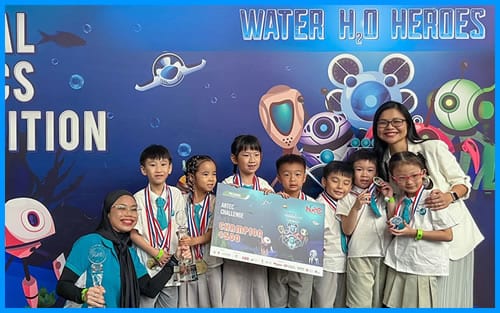
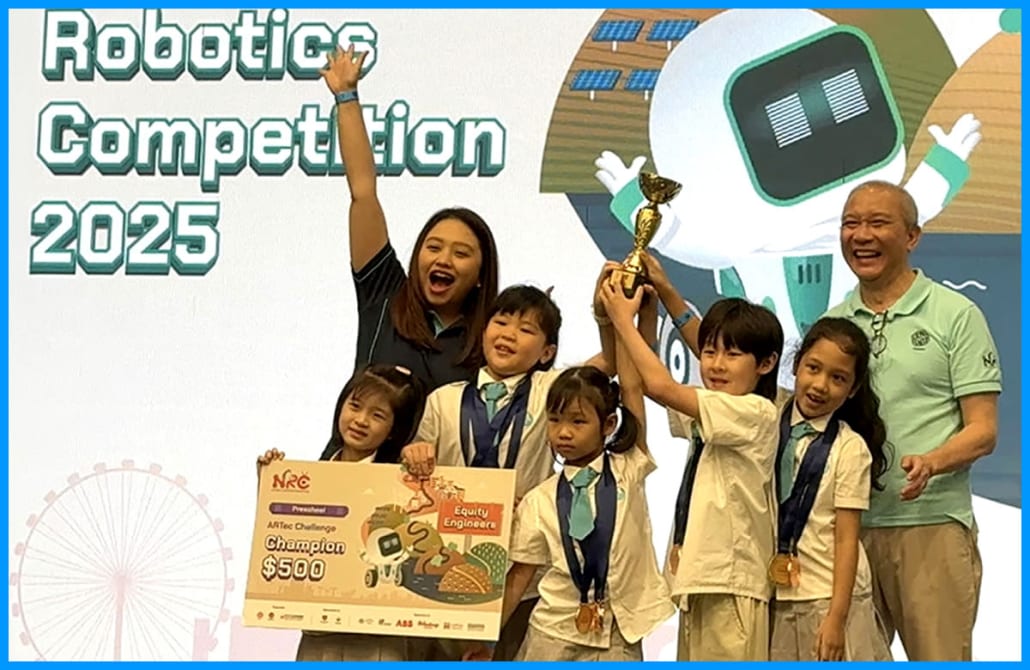
Not claims — real examples of what children years away from Primary 1 are already capable of.
Not three academic subjects — three environments that, together, cultivate Tri-Intelligence.
Not simply a language.
The environment where children learn to think, communicate and imagine. It is the language of today's world — the natural medium through which children collaborate, explore ideas and solve problems.
Not simply another language.
The environment where children absorb culture, heritage, identity and values. It carries thousands of years of civilisation — heritage, traditions, stories and ways of thinking children cannot fully encounter through English alone.
Not simply technology.
The environment where children learn to think alongside intelligent machines. Not because AI is fashionable, but because it is becoming part of every child's future — where children learn to ask better questions and create with it.
See how capabilities build, stage by stage. Real progressions from our curriculum, from Pre-Nursery to K2.
Absorbing the sounds and rhythms of language. Children explore phonemic awareness through songs, stories, and playful interactions, building the foundation for confident reading.
Speaking with confidence. Children present to their peers, developing public speaking skills, voice projection, and the ability to articulate thoughts clearly from an early age.
Building phonetic knowledge. Systematic phonics instruction combined with leveled readers helps children decode words independently and develop a love for reading.
Expressing ideas through writing. Children move from dictating stories to writing their own narratives, developing voice, structure, and creative expression.
Discovering the richness of language. Through classic and contemporary literature, children explore themes, characters, and the power of storytelling.
Using AI to bring original ideas to life. Children co-create stories with AI tools, learning to direct technology as a creative partner rather than a replacement for imagination.
That's the journey. Now see the result:
Living in a Mandarin-speaking environment. Children absorb tones, vocabulary, and sentence patterns naturally through daily immersion and meaningful interactions.
Speaking Chinese with confidence. Children present and perform in Mandarin, developing fluency, tonal accuracy, and cultural expression.
Recognising characters, then reading. Our Chinese Rapid Word Recognition system builds character mastery through visual memory and contextual learning.
Personalising what each child revises. AI adapts to each child's pace, reinforcing weak areas and accelerating mastery of Chinese characters and vocabulary.
Practising spoken Chinese conversationally. AI-powered oral practice gives children safe, repeated opportunities to develop spoken fluency and confidence.
Writing and expressing ideas in Chinese. Children compose their own stories and essays in Mandarin, demonstrating true bilingual creative capability.
That's the journey. Now see the result:
The foundation, before the tools. We prioritise EQ, creativity, and critical thinking — the human capabilities that make AI meaningful rather than a crutch.
AI personalising what each child learns. Adaptive learning tools identify gaps and tailor practice, ensuring no child is left behind or held back.
Learning to direct intelligent machines. Children learn to give precise instructions to AI and robots, developing computational thinking and logical reasoning.
Using AI to extend imagination. Children co-create art, stories, and designs with generative AI, learning that technology amplifies rather than replaces creativity.
Applying AI across every domain. From robotics competitions to creative projects, children integrate AI thinking into all areas of learning.
That's the journey. Now see the result:
Happy, engaged learners who rise to challenges because they love learning — not because they fear falling behind.
For more than three decades, ChildFirst has consistently anticipated educational change.
CNN International
ChildFirst's forward-thinking AI curriculum featured in CNN's documentary on the future of education and AI.
View coverage →
Channel NewsAsia
The only pre-school featured in CNA's series for our Coding programme — a 3-minute segment starting at 43:57.
View coverage →
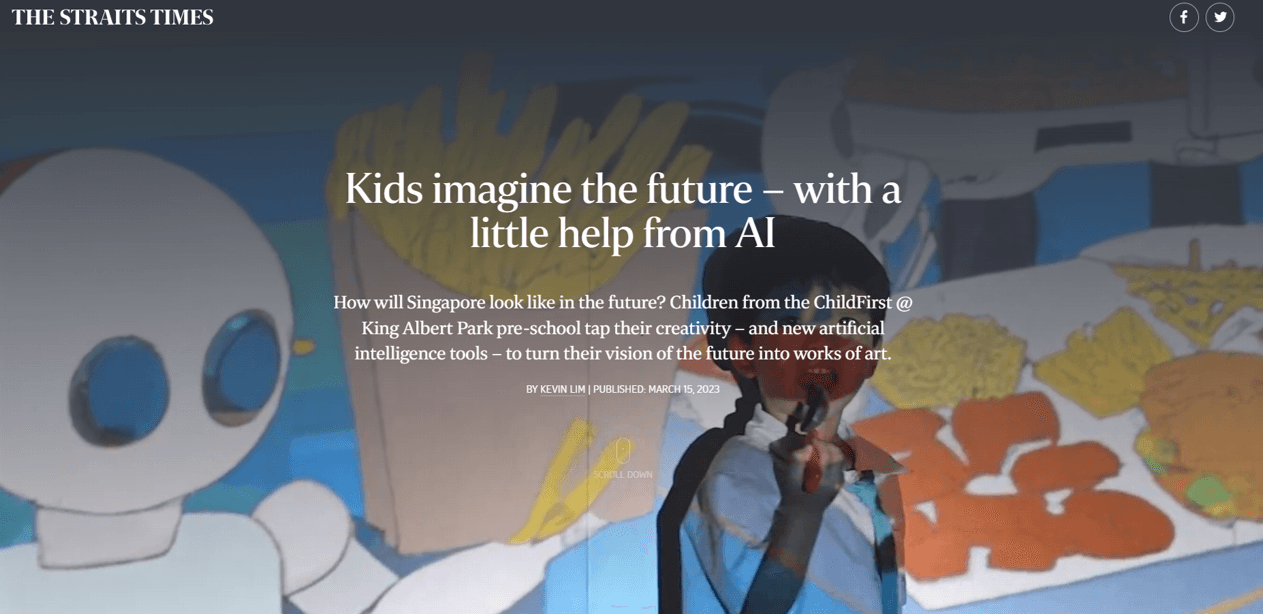
The Straits Times
ChildFirst children used generative AI to turn their vision of Singapore's future into works of art.
View coverage →
Hear from families who have experienced the ChildFirst difference.
The Chinese curriculum in particular is excellent and he finds primary school Chinese a breeze.
The tri-language program is phenomenal. The AI-driven Chinese app is cutting-edge, identifying areas for improvement and reinforcing learning through repeated practice.
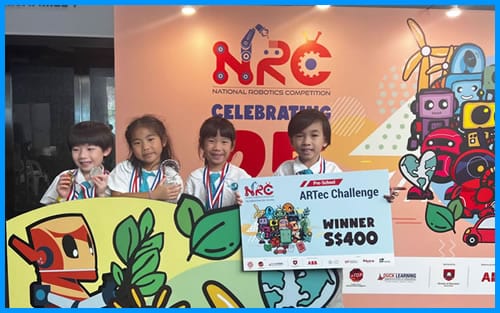
The robotics and coding sparked a genuine interest in her, and the opportunities to participate in National and International Robotics Competitions were truly unforgettable.
You've seen what ChildFirst children can do. Book a personal school tour at any of our 5 centres and see it for yourself.
Quick answers to the most important questions about your child's future.
Education can't promise a fixed destination, but it can shape a trajectory. That trajectory depends on direction (the capabilities that matter most as intelligence becomes abundant), nature (a child's innate potential), and nurture (the environment and opportunities we provide). ChildFirst is built around Tri-Intelligence because we believe these are the capabilities that hold up regardless of how the future unfolds.
By age 7, the brain has already eliminated roughly 50% of the extra neural connections it was born with, to conserve energy — a process called synaptic pruning. This happens during specific windows of opportunity — brief periods when certain capabilities are most receptive to being shaped — and once a window closes, the same learning takes far more effort and is never quite as complete. Starting early means working with that biology, not against it.
Our founder is a Harvard PhD in Physics who left Silicon Valley to build preschools for his own children, and our philosophy isn't a reaction to AI — it's been anticipating this shift for years, across more than 50 preschools in Asia. We built Tri-Intelligence and ChildFirst Trilingual around a simple belief: as intelligence becomes abundant, education has to optimise what makes children human, unique, and capable of working with — not against — the tools around them.
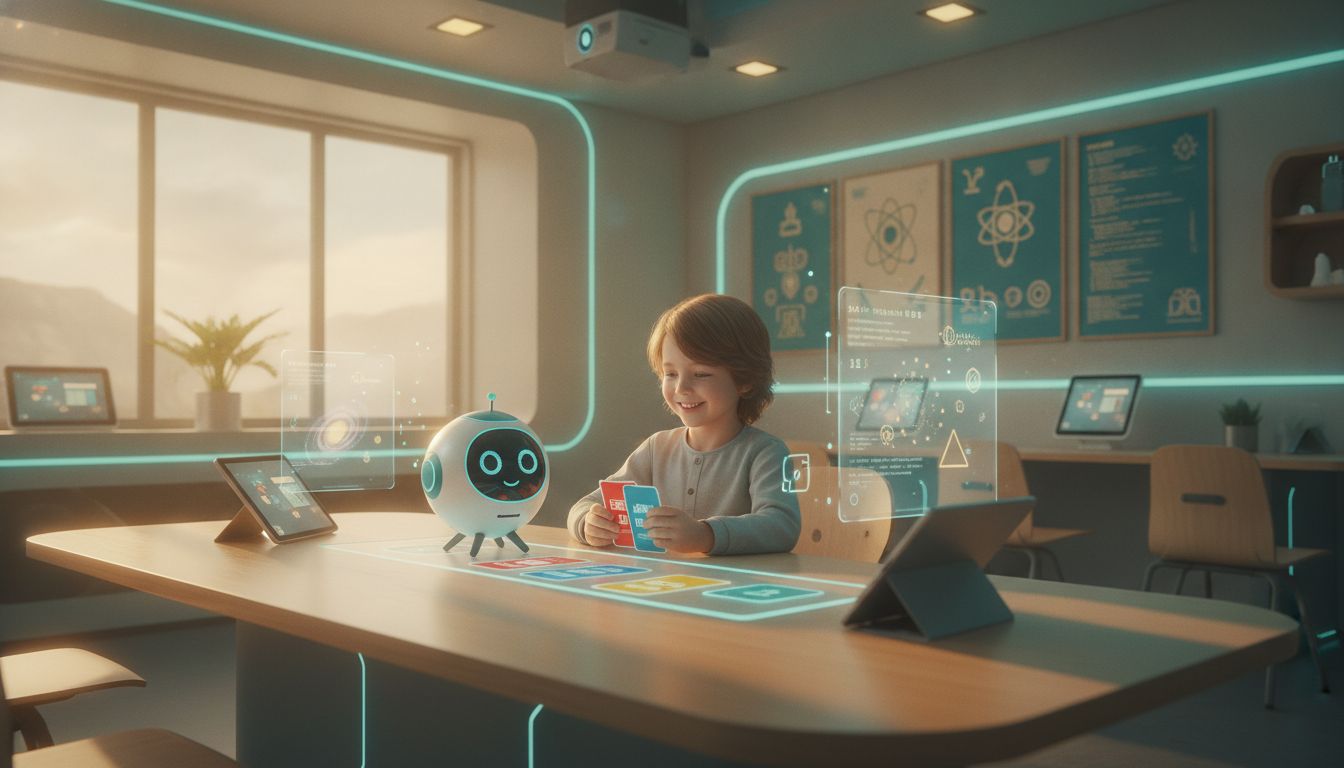
We look at intent, not just duration — there's a real difference between passive scrolling and active creation. Our four-year-olds learn coding off-screen first, using physical cards to program robots with logic and movement, before any screen is introduced. When screens do appear, it's for active creation — designing a robot dance routine, programming a driverless car, or building a 3D game level by level — never as a passive distraction.
Through our research-backed Chinese Rapid Word Recognition (CRWR) system and AI-supported learning, K2 children typically master up to 50% of the MOE Primary 1 vocabulary before graduation, ensuring a smooth transition. Rather than rote memorisation, we build each character from a memorable visual or story.
Still have questions? The best answers come from a visit.
Book a Personal School Tour